From its Mediterranean location, the country knew how to position itself in a privileged way within the regional bloc. What is the secret to having the third most important fleet of barges in the world.
Because of its Mediterranean location, transportation and logistics acquire fundamental value in Paraguay because the competitiveness of its exports and the efficiency of its import processes depend on them. Paraguay knew how to gain strength to become a true logistics power in Mercosur.
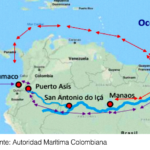
It is true that it is Mediterranean, but it is even more true that it is surrounded by important rivers such as the Paraguay and the Paraná, which flow into the Río de la Plata Basin and the Atlantic Ocean. In addition, it is located a little more than 1,000 kilometers from the closest outlet to the sea, equidistant from the countries in the region, which favors business and international trade.
Paraguay went from transporting 700,000 tons at the end of the 1980s to 23 million tons currently. To this end, it has a fleet of more than 3,000 vessels and approximately 400 tugboats that serve Paraguay and the entire region, starting in Corumbá (Brazil), covering the ports of the Tamengo canal, in Bolivia, to the Río de la Plata, in Argentina. This generates jobs for a little more than 5,000 people directly and about 25,000 indirectly.
With a private outlay that exceeds US$2.5 billion, Paraguay was able to put together a port conglomerate that today reaches 50 terminals, 42 of which are private, and which, together, offer services to all types of cargo.
Belén Delvalle
In Paraguay it could be used to partly explain this logistical development because the country has the most competitive and simplified tax and tax benefits regime in the region.